
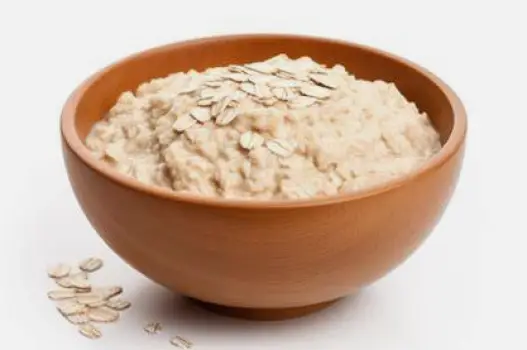
 h2>Can dogs eat oatmeal?
Yes, plain oatmeal can be offered to most dogs as an occasional extra. It is not a complete meal, and it is not a necessary part of a dog's diet. A dog's core nutrition should come from a food that is complete and balanced, meaning it contains all the required nutrients in the correct proportions. Oatmeal does not meet that standard on its own and should never be treated as a stand-in for a complete ration.
Whether oatmeal is a reasonable addition for a particular dog depends on several things: the dog's overall diet, how many calories it can spare for extras, any health conditions it has, and the exact ingredients in the oatmeal product. An extra like oatmeal fits within a limited allowance for treats rather than being added freely on top of a full day's food.
Some dogs should not be given oatmeal without professional input. Dogs with a medical condition, a dietary sensitivity, or a veterinarian-prescribed diet may find ordinary extras unsuitable, so any addition is best cleared with the treating veterinarian first. For a healthy dog eating a complete diet, plain oatmeal offered in small amounts is generally an acceptable occasional extra rather than something the dog needs.
What oatmeal can-and cannot-add to a dog's diet
Oats are a grain-based carbohydrate that supplies fiber along with other nutrients. That makes oatmeal a legitimate food ingredient, but it does not make a serving of oatmeal valuable to a dog in any medical sense.
The distinction that often gets blurred is between a food ingredient and a therapeutic intervention. Containing fiber or other nutrients is not the same as being proven to do something for a dog's health. The available nutrition guidance supports oatmeal only as an unbalanced extra, not as a treatment for weight management, constipation, diabetes, skin problems, allergies, inflammatory bowel disease, or any other condition. If a dog has one of these concerns, oatmeal is not the answer, and the article makes no such promise.
Remember what “complete and balanced” actually requires. A single ingredient, however nutritious in isolation, does not deliver nutrients in the ratios a dog needs across a full diet. Adding oatmeal changes the calorie and nutrient mix of the day without making that day's intake complete. Its role is modest: a small, palatable extra, judged on its ingredients and its calories rather than on any health benefit it is imagined to provide.
Which types of oatmeal are suitable for dogs?
Not all oatmeal products are equally easy to evaluate. The simplest to assess is plain oats, whether rolled or steel-cut, cooked in water with nothing added. Cooking matters here: dogs digest complex carbohydrates more easily once those carbohydrates have been cooked, which is why cooked oats are preferable to raw, uncooked oats. This is a digestibility point, not evidence of any therapeutic effect.

Instant and flavored packets are harder to judge. The issue is not that instant processing makes oats poisonous, because it does not. The concern is what gets added. Flavored packets may contain sweeteners, including xylitol, or other ingredients that are unsafe for dogs, so each product has to be read ingredient by ingredient rather than assumed safe.
Overnight oats and oatmeal-based baked goods such as cookies and bars fall into the same category. These are composite foods that often combine oats with other ingredients, and they cannot be judged by the presence of oats alone. A product is only as safe as its full ingredient list.
For a dog, plain cooked oats are the form that leaves the least room for a hidden problem. Anything flavored, pre-mixed, or baked deserves a careful look at every ingredient before it is considered.
Oatmeal for Dogs: What It Can and Can't Do
How to prepare oatmeal safely
Keep it plain. Cook the oats in water, with no added sugar, sweeteners, flavorings, or toppings, then let the oatmeal cool before offering any to a dog. Cooking improves starch digestibility; keeping it plain removes the main sources of risk.

Before offering any oatmeal product that did not come straight from plain oats, read the complete ingredient label. Several common human-food ingredients are dangerous for dogs and should rule a product out entirely:
- Xylitol, which may also be listed as birch sugar, wood sugar, or birch bark extract
- Grapes and raisins
- Chocolate
- Onions and garlic
- Macadamia nuts
Any of these makes the product unsafe, regardless of how much oatmeal it contains. Oats being present does not offset a hazardous ingredient.
If you suspect a dog has eaten xylitol or any of these items, this calls for immediate professional help rather than anything done at home. Contact a veterinarian, an emergency animal clinic, or an animal poison-control center right away. Do not attempt home decontamination or try to make the dog vomit.
Composite oatmeal foods deserve the same scrutiny. Cookies, flavored packets, and overnight-oat mixtures cannot be cleared by looking at the oats; the rest of the recipe determines whether they are safe to offer at all.
How much oatmeal can a dog have?
The controlling principle is calories, not a fixed spoon count. Treats and other extras, including oatmeal, should together provide no more than 10% of a dog's daily calories, with the rest coming from a complete and balanced diet. Oatmeal offered as an extra belongs inside that allowance. It is not something to add on top of a full ration without reducing elsewhere, since extra calories on top of complete feeding can unbalance the day.
There is no universal spoon-per-pound rule, and no single serving size is safe for every dog. How much oatmeal fits depends on the individual dog: its size, its daily calorie needs, what it is already eating, and its health status. A small dog's treat allowance is very different from a large dog's, and two dogs of the same weight can have different calorie needs.
Because of that, the practical approach is to treat oatmeal as a small portion that stays well within the treat allowance for that specific dog, rather than following a household-measure figure borrowed from somewhere else. A veterinarian can help translate the calorie allowance into an appropriate amount for a given dog.
When to avoid oatmeal or consult a veterinarian
Some dogs should get individualized advice before oatmeal is added at all. Dogs on a veterinarian-prescribed diet, dogs with a medical condition, and dogs with a known dietary sensitivity are the clearest cases. Ordinary extras may be inappropriate for these dogs, and the change is best cleared with the treating veterinarian rather than assumed to be harmless.
For any dog, a new food warrants watching the response. If a dog develops vomiting, diarrhea, or another adverse reaction after being given oatmeal, stop offering it and contact a veterinarian for guidance specific to that dog. Nonspecific digestive or skin signs are not enough to diagnose an oat or grain allergy, and reaching that conclusion at home is not reliable; a veterinarian can sort out what is actually going on.
Two different situations. A dog that simply does not tolerate a new extra well is a routine concern handled by stopping the food and checking with a veterinarian. Suspected exposure to a known hazardous ingredient, such as xylitol, is an urgent matter that calls for immediate professional help. The first can wait for a normal appointment; the second cannot.