
 h2>The short answer: Zyrtec can be taken without food
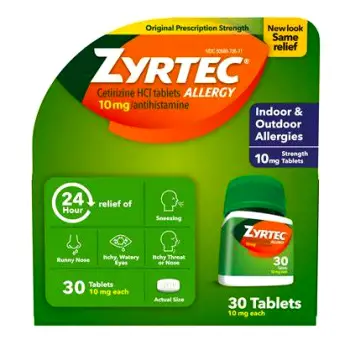
Standard oral Zyrtec Allergy, which contains the active ingredient cetirizine hydrochloride, can be taken safely on an empty stomach or with a meal. According to U.S. labeling, a meal is not required before taking this antihistamine, and eating alongside the dose is equally acceptable. This guidance applies specifically to the standard cetirizine-only formulation.
Distinguish standard Zyrtec from other products in the family. Zyrtec-D is a different combination product that includes pseudoephedrine as well as cetirizine. While the feeding flexibility described here applies to standard Zyrtec, users of other formulations should always verify the specific administration instructions on their own product's Drug Facts label.
Does food change how Zyrtec works?
The labeled administration rules for standard oral Zyrtec permit either fed or fasting use, meaning readers do not need to coordinate their dose with mealtimes. The medication's effectiveness is not dependent on the presence of food in the stomach.
Because the label allows taking the medicine without food, it is natural to wonder if an empty stomach produces faster relief. There is no guarantee that taking Zyrtec on an empty stomach will work more quickly or produce stronger symptom control for every individual. The permission to take the drug without food is an administration guideline, not a promise regarding the onset or intensity of relief. Users should expect consistent daily management rather than relying on meal timing to alter how the medication performs.
Zyrtec administration quiz
How and when to take Zyrtec
Readers should follow the Drug Facts directions printed on their specific package rather than deriving dosing schedules from meal timing. For the standard U.S. 10 mg Zyrtec tablet, the label directs adults and children 6 years and older to take one tablet once daily. The label strictly prohibits taking more than one 10 mg tablet in a 24-hour period. In some cases, a 5 mg product may be appropriate for less severe symptoms, but the maximum daily limit remains a critical safety boundary.
Food choice does not change this maximum dose. Taking Zyrtec with a large meal or on an empty stomach never justifies taking an extra tablet to manage symptoms. If symptoms persist despite taking the labeled dose, adding more medication is unsafe and unsupported by labeling. Consistency in daily use is the primary factor in maintaining symptom control, regardless of when the dose is taken relative to eating.
What to do if Zyrtec upsets your stomach
Some individuals may experience gastrointestinal symptoms, such as nausea or stomach discomfort, after taking cetirizine. The Drug Facts labeling notes these as reported adverse effects, though it is often unclear whether the symptoms are caused by the medication itself or by other factors.
Because standard Zyrtec can be taken with food, a practical step for someone experiencing stomach upset is to take their next labeled dose with a meal or a snack. This can improve comfort without altering the therapeutic dose. The presence of these symptoms does not mean the medication is unsafe for everyone, nor does it require immediate discontinuation if the side effects are mild.
For persistent or troublesome stomach discomfort, readers should consult a pharmacist or clinician. It is not advisable to attempt self-diagnosis of the cause or to split the product to reduce exposure. Changing the dose or adding another medicine to counteract side effects should only be done with professional guidance and specific product advice.
Drowsiness, alcohol, and other safety precautions
Although cetirizine is frequently categorized as a “newer” or less-sedating antihistamine, drowsiness can still occur in some users. The U.S. Zyrtec label carries a specific warning that drowsiness may happen, and it advises users to exercise care when driving or operating machinery.
This risk is significantly heightened by the simultaneous use of alcohol, sedatives, or tranquilizers. These substances can increase the sedative effects of cetirizine, impairing coordination and judgment. The presence of food in the stomach does not mitigate this interaction. The label precautions regarding alcohol and sedating medicines apply regardless of whether the dose is taken on an empty stomach or with a meal. Users should be aware of how the medication affects their individual alertness before engaging in activities that require focus.
Check which Zyrtec product you have
Confusion between standard Zyrtec and Zyrtec-D is common but clinically significant. Standard Zyrtec contains only cetirizine hydrochloride. Zyrtec-D, however, is a combination product that includes pseudoephedrine, a decongestant, in addition to the antihistamine.

These two products have separate directions, safety profiles, and precautions. The extended-release tablet and safety restrictions associated with Zyrtec-D are not interchangeable with those of cetirizine-only Zyrtec. The standard 10 mg tablet directions do not apply to Zyrtec-D or to other formulations such as children's liquids, chewables, or disintegrating tablets.
Readers must check the active-ingredient panel on the front or side of the box to confirm exactly which product they have. Following the exact package label for the specific formulation in hand is essential for safety. Misidentifying the product can lead to incorrect dosing or unintended exposure to ingredients that may not be appropriate for the user's condition.
When to ask a healthcare professional
There are several situations where consulting a pharmacist or clinician is necessary before using standard Zyrtec. The U.S. label explicitly directs individuals with kidney or liver disease to ask a doctor before use. Because these organs are responsible for processing and eliminating the medication, impaired function can affect how the drug behaves in the body.
The label advises that people who are pregnant or breastfeeding should seek health-professional advice as specified. There is also uncertainty regarding appropriate dosing for special populations, and the label does not provide simplified dose reductions for these groups. Users should not attempt to calculate their own adjustments.
Further reasons to seek professional guidance include uncertainty about which product is correct, persistent adverse effects like stomach discomfort or excessive drowsiness, or accidental overdose. In the event of an overdose, the label instructs users to get medical help or contact a Poison Control Center immediately. Healthcare professionals can provide individualized advice tailored to the user's health history and other medications.