
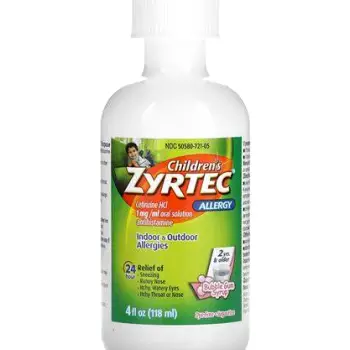
 h2>The short answer: Zyrtec's daily dose limits
The maximum amount of regular Zyrtec (cetirizine HCl) permitted in 24 hours depends on age and specific health factors outlined on the U.S. Over-The-Counter drug label.
For adults and children 6 years and older, the labeled maximum is 10 mg in a 24-hour period. Dosing within this limit is typically 5 mg or 10 mg once daily, chosen based on symptom severity.
For adults 65 years and older, the labeled maximum is lower. The specific chewable tablet label directs this group to take no more than 5 mg in 24 hours.
For children ages 2 to under 6 years, the maximum is 5 mg in 24 hours. Children under 2 years of age should not use this medication without a doctor's direction.
These figures represent the standard U.S. OTC label directions for regular Zyrtec products. The specific package for the product in hand remains the controlling authority for dosing limits.
Confirm which Zyrtec product and strength you have
Regular Zyrtec products contain the antihistamine cetirizine HCl. This ingredient is used for the temporary relief of symptoms associated with hay fever or other upper respiratory allergies, such as runny nose, sneezing, itchy or watery eyes, and itching of the nose or throat.
Before determining the number of tablets or milliliters to take, verify the active ingredient, strength, and dosage form on the package. Regular Zyrtec is sold in various strengths and forms, including chewable tablets and liquids. Because concentrations vary, you cannot safely count doses without confirming the exact strength listed on your specific product label.
Distinguish regular Zyrtec from Zyrtec-D. Zyrtec-D contains cetirizine HCl combined with a nasal decongestant. This combination product follows entirely different dosing directions. The manufacturer states that Zyrtec-D is taken as one tablet every 12 hours, with a maximum of two tablets in 24 hours. This twice-daily schedule applies only to Zyrtec-D and must not be applied to regular Zyrtec. Confusing the two products can lead to taking too much decongestant or misinterpreting the antihistamine limit.
Zyrtec dosing by age
The U.S. label provides distinct dosing schedules based on age groups. Always refer to the specific product package for confirmation.
Children 2 to under 6 years The standard direction is 2.5 mg once daily. If symptoms require it, the dose may be increased to 5 mg once daily. Alternatively, the dose can be split into 2.5 mg every 12 hours. In all cases, the total amount must not exceed 5 mg in 24 hours.
Children 6 years and older, and adults The labeled direction is 5 mg or 10 mg once daily. The choice between 5 mg and 10 mg depends on symptom severity. The total daily intake must not exceed 10 mg.
Adults 65 years and older The chewable tablet label directs this age group to take 5 mg once daily. The maximum limit for this population is 5 mg in 24 hours, which is lower than the limit for younger adults.
Children under 2 years The label states to ask a doctor before use. These young children are excluded from the standard self-care dosing ranges.
When measuring liquid forms, do not estimate volumes. Calculate the dose only if the exact concentration on the bottle is known.
Zyrtec Dosing Knowledge Check
When a clinician should determine the dose
Standard label doses may not be safe or appropriate for everyone. Certain health circumstances require professional medical guidance before using Zyrtec.
Liver or kidney disease is a primary reason to consult a healthcare provider. The U.S. label explicitly advises consumers with these conditions to ask a doctor before use. A clinician must determine whether a different dose is needed or if the medication should be avoided, as impaired organ function can alter how the body processes the drug.
Age also dictates the need for professional oversight. Children under 2 years require a doctor's direction rather than self-administering the drug.
Pregnancy and breastfeeding involve specific precautions. The label advises asking a health professional before use during pregnancy. It further states that use while breastfeeding is not recommended. Individuals in these populations should seek specific guidance rather than relying on general label dosing.
Can Zyrtec be taken twice a day?
For the majority of users, regular Zyrtec is taken once daily. The standard schedule for adults and children 6 years and older is a single dose of 5 mg or 10 mg per day. Taking an additional dose whenever symptoms return is not supported by the OTC label for this age group.
There is a narrow exception for children ages 2 to under 6 years. The cited chewable label allows this younger group to take 2.5 mg every 12 hours. This twice-daily schedule is permitted only if the total daily intake does not exceed 5 mg. It is not a standard option for older children or adults seeking symptom relief.
Higher-dose regimens or more frequent dosing may be used in clinical settings for specific medical conditions under specialist supervision. These are not standard OTC allergy dosing strategies and should not be attempted without direct medical instruction.
Side effects and precautions at labeled doses
Even when taken at labeled doses, Zyrtec can cause side effects that impact safety and daily function.
Drowsiness is a known potential side effect. The label warns that this drowsiness may be increased by alcohol, sedatives, and tranquilizers. Individuals should avoid alcohol while taking the medication.

Before driving or operating machinery, individuals should observe how the medication affects them. Caution is advised until it is known whether drowsiness or reduced alertness occurs. If using tranquilizers or sedatives, ask a doctor or pharmacist before use to assess potential interactions.
An allergic reaction to the medication is possible. The label instructs users to stop use immediately and seek medical help if such a reaction occurs. These precautions are relevant to dosing decisions, as increased doses or inappropriate use may heighten these risks.
What to do if too much Zyrtec is taken
If a suspected overdose of Zyrtec occurs, do not wait for symptoms to appear. The label-directed action is to obtain medical help immediately.
In the United States, contact a Poison Control Center right away. The U.S. Poison Control number is 1-800-222-1222. This service provides immediate guidance on managing potential overdose situations.
Readers outside the United States should use their local poison-information service or emergency medical number. Do not attempt to manage an overdose at home or rely on internet advice for treatment thresholds. Immediate professional medical assistance is the required response to a suspected overdose.