
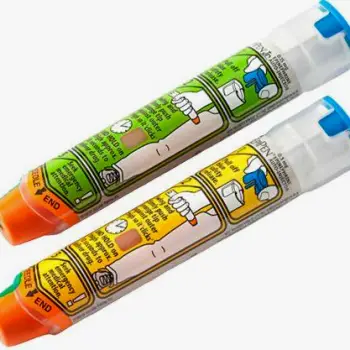
 h2>The standard EpiPen dose for adults
In the United States, the EpiPen 0.3 mg auto-injector is the standard labeled dose for patients who weigh 30 kg (about 66 lb) or more. This fixed-dose device is designed for emergency use in the treatment of allergic reactions, including anaphylaxis. It is not intended for routine daily administration, meaning that standard concepts regarding missed doses do not apply; instead, the device is used only when symptoms occur.

For individuals weighing between 15 kg and 30 kg, the recommended device is EpiPen Jr, which delivers a fixed dose of 0.15 mg. Each auto-injector, regardless of strength, is manufactured to deliver one single dose. The devices are intended for single use only.

Why body weight and country-specific guidance matter
Device selection for EpiPen is based primarily on body weight rather than age or adulthood alone. Under US labeling, the threshold for the standard 0.3 mg dose is 30 kg. Prescribing information can vary significantly by region. For example, UK prescribing information specifies a 0.3 mg adrenaline intramuscular injection for adults. These differences highlight that available strengths and recommended weight thresholds are jurisdiction-specific and should not be generalized across borders.
Fixed-dose auto-injectors do not provide an exact, individualized milligram-per-kilogram dose. International reviews have noted substantial variation in national recommendations, and optimal dose-response evidence during active anaphylaxis remains limited. Patients with unusually low or high body weight, or those with concerns about device suitability, should consult their prescriber to determine the appropriate device before an emergency occurs.
When a second EpiPen dose may be needed
Anaphylaxis can be severe and persistent, or symptoms may recur after initial improvement. In such cases, another single-use auto-injector may be necessary. US labeling indicates that severe persistent anaphylaxis may require a second injection. More than two sequential epinephrine doses should be administered only under direct medical supervision.
In the UK, prescribing information permits a second injection 5 to 15 minutes after the first if symptoms persist, which is why patients are often prescribed two auto-injectors to carry simultaneously. Because international guidelines differ, patients should follow the specific advice provided by their healthcare provider regarding when and how to use a second dose.
EpiPen: emergency use essentials
How and where to administer EpiPen
EpiPen must be injected into the anterolateral aspect of the thigh. The device can be administered through clothing if necessary, though it is critical to follow the specific instructions included with the device and any prior training received. The injection must never be administered intravenously, nor should it be placed in the buttocks, fingers, hands, or feet.

Each auto-injector is designed for single use only. Once activated, the device cannot be reused, and any remaining solution visible in the barrel is not available for administration. The used device should be discarded appropriately, typically in a sharps container, to ensure safety.
What to do immediately after using EpiPen
EpiPen serves as emergency supportive treatment and does not replace the need for immediate professional medical assessment. After administration, emergency services must be activated, or the patient must be transported to a hospital immediately. This step is required even if symptoms appear to improve, as biphasic reactions or prolonged anaphylaxis can occur.
If symptoms persist or worsen while waiting for emergency help, a second prescribed device may be used according to prior medical instructions. The use of a second auto-injector does not eliminate the necessity for urgent medical evaluation. Patients should be prepared to inform emergency responders that anaphylaxis has occurred.
Safety, accidental injection, and overdose concerns
There are no absolute contraindications to adrenaline use during an allergic emergency. Common labeled side effects include anxiety, apprehension, nervousness, headache, dizziness, tremor, tachycardia, palpitations, nausea, vomiting, sweating, and weakness. These effects are expected responses to epinephrine and do not indicate that the medication should be withheld during an emergency.
Accidental injection into the hand, finger, foot, or digits can cause a reduction in blood flow to the affected area and requires immediate emergency evaluation. Distinguish correct intramuscular injection from dangerous intravenous administration. Auto-injectors deliver fixed doses and must not be altered, combined, or used to draw out residual liquid.
Storage, inspection, and replacement
Proper storage is essential for the device to function during an emergency. US labeling specifies that EpiPen should be stored in the supplied carrier tube at 20°C to 25°C (68°F to 77°F), with permitted temperature excursions between 15°C and 30°C (59°F to 86°F). The device must be protected from light, should not be refrigerated, and must be kept away from extreme heat or cold.
The solution inside the auto-injector should be inspected periodically. The device should be replaced if the solution appears cloudy, contains particles, or has developed a pinkish or brown color. Because the device is single-use, any activated or expired auto-injector should be disposed of according to local guidelines, typically in a sharps container, and replaced with a new prescription.